Unseen: The Hidden Face of Autism in Women
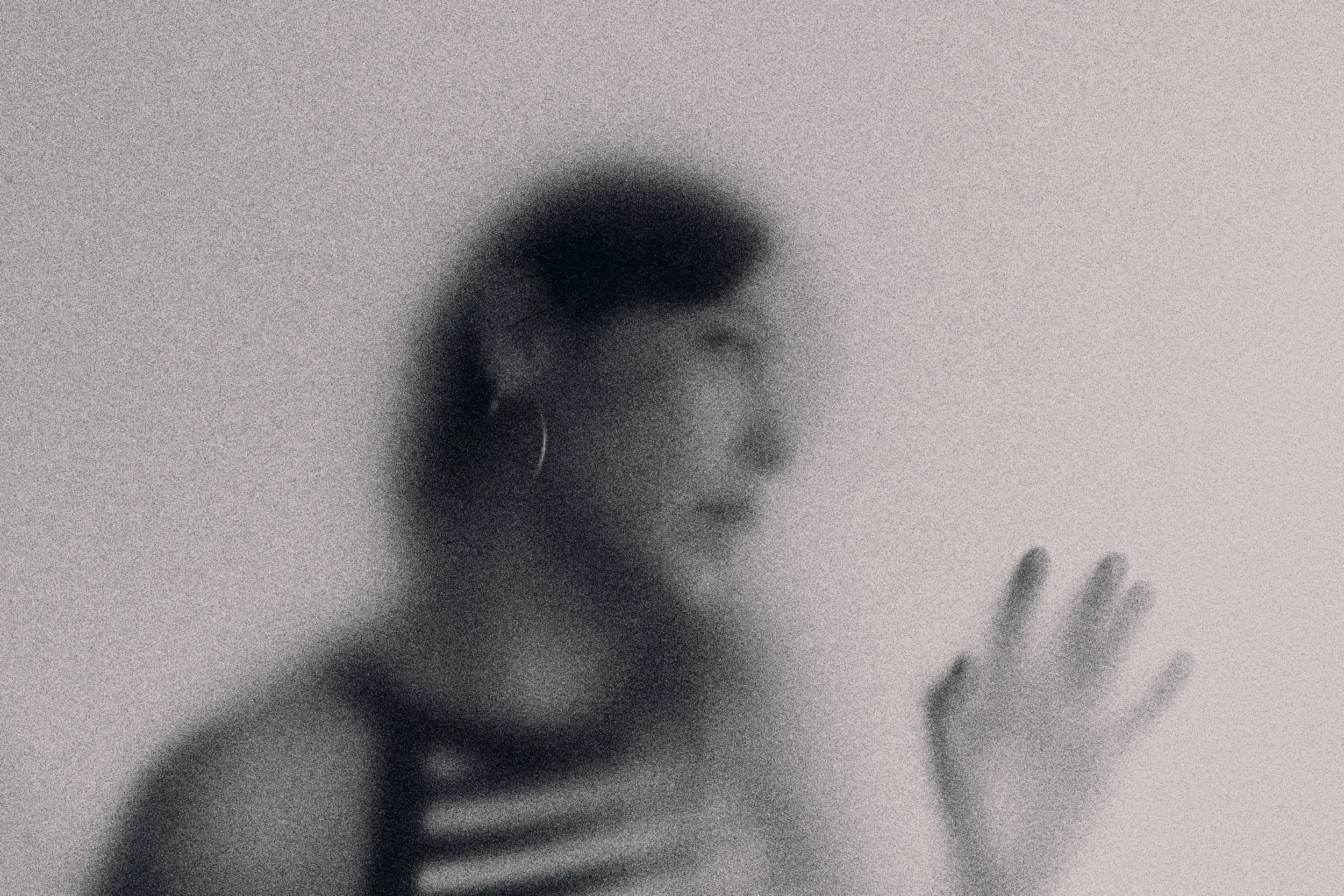
Photo by Evelyn Verdín for Unsplash.
(~15-20 min read)
As a neurodivergent executive and career coach, I've been taking autism (and ADHD) assessments for years.
Not because anyone asked me to — though a client recently did, and I'll come back to that — but because I'm the kind of person who, once she finds a thread, pulls it. Periodically and compulsively, as the research shifts, my self-knowledge deepens, and the world slowly, reluctantly begins to reckon with how narrow its original definitions were.
I take them to see how the questions have changed. Whether the logic has evolved. Whether they're getting any better at identifying anyone who isn't a white male presenting with the specific cluster of externalized, visible, disruptive traits the field was originally built to notice.
And I take them to see what I notice differently this time.
Because here's the thing about self-assessment when you're neurodivergent: the answers don't just reflect your traits. They reflect your current relationship with your traits. Your current vocabulary for them. What you've learned since last time that lets you see something you couldn't name before.
This time, I noticed something about in-person conversation that I hadn't had language for before. I can make eye contact. I can make small talk. Through decades of practice and genuine interest in people, I've become quite good at both. What I couldn't see until recently is the cost.
When I'm talking to someone in person, a second dashboard opens. It runs alongside whatever conversation I'm having — monitoring my body, their body, how they're responding to my adjustments. Am I making enough eye contact? Have I asked a question recently, or have I been talking too long? Did they understand that point two minutes ago and I've been explaining it ever since? What is the energy in this room?
Add the full secret social rulebook running its background check on every exchange, and what you have is a person who is simultaneously present and operating a very demanding secondary process the other person cannot see.
In some ways, this is part of what makes me a good coach. That dashboard is exquisitely sensitive. It catches things. It serves the work.
But it is expensive. Particularly when I'm trying to hide that it's running.
What made it undeniable was recognizing that the dashboard opens for everyone. Including my closest friends — the ones I've told everything, the ones I'd call at 3am. When I see them in person after years of long-distance closeness, the overhead is still there. Uninvited, around someone I have no reason in the world to perform for.
That's how I know it isn't a choice. If I were choosing it — socially, strategically, as a kind of protective performance — I would turn it off for them. I can't. It runs regardless. Which means it belongs to my wiring, not my will.
I'm learning not to mask it. With clients especially, I'm learning to notice it, and when it's relevant, to name it — to make the overhead visible as part of a shared experience, a learning moment, a demonstration of what a tool looks like in a real brain, in real time.
It's a practice. The unmasking always is.
So when a client recently brought up autism assessments — curious about her own neurodivergence, frustrated by a system that has never quite seen her clearly — I recognized the timing as right for my next deep-dive.
The following session, her reaction reminded me that what I was sharing with her is something more women need to know.
The Test Was Never Designed for Her
Standard diagnostic instruments were largely developed and validated on male samples — and this isn't a historical footnote or an old problem we've since corrected. Right now, today, these are the tools being used. Which means they are, by design, less sensitive to how autism actually presents in women and girls. (Hull et al., 2020)
The tests themselves are measuring the wrong things.
Some tools count "not enjoying fiction" against an autism score — which is remarkable, given that many autistic people are voracious fiction readers, drawn to narrative as a way of understanding the social world they often find confusing. Others over-index on rote number memorization while ignoring pattern recognition in language, sound, and meaning — areas where many autistic people actually excel.
The GQ-ASC (Girls Questionnaire for Autism Spectrum Conditions) was developed specifically because researchers recognized that different traits matter when assessing for autism in girls and women.(Nature, 2025) The fact that this tool exists is a good thing. The fact that it took this long — and is still far from universally used — is not.
What does this mean in practice? It means that autistic women and girls are being evaluated by tools that weren't built for them, are frequently found "not autistic enough" to qualify for a diagnosis, and go home with nothing — or worse, with the wrong diagnosis entirely.
(And while this piece focuses on women, it's worth naming clearly: the diagnostic gap is even wider for people of color — Black, Latino, Hispanic, and Indigenous people are consistently less likely to receive an autism diagnosis than their white counterparts, regardless of socioeconomic status (Mandell et al., 2009) — and autistic people are significantly more likely to identify as LGBTQ+ than the general population. (Warrior et al., 2020) Transgender and gender-diverse people face compounding layers of invisibility in a diagnostic framework that was built for exactly one kind of person. This piece can't hold all of those stories. But they exist, they matter, and they deserve their own.)
Her Symptoms Don't Look Like His
When a boy struggles in school, struggles to make friends, stimulates or melts down visibly, someone notices. He gets flagged, evaluated, supported — imperfectly, often inadequately, but noticed.
When a girl does the same thing? She learns to hide it.
This is what researchers call masking or camouflaging: the practice of suppressing or disguising autistic traits to appear neurotypical. And autistic women and girls do it at significantly higher rates than their male counterparts. (Lai et al., 2017)
Why? Because girls are socialized to read environments for safety from the time they're small. We are conditioned — through a thousand invisible lessons — to monitor, adapt, smooth, accommodate. To notice what others need and adjust accordingly. For autistic girls, this socialization interacts with their neurology in a specific way: they become expert at performing neurotypicality. Mirroring facial expressions. Pre-scripting social interactions. Learning conversational rules by rote. Studying their peers the way you'd study for a test you can't afford to fail.
From the outside, this looks like social competence. It is, in fact, an extraordinary amount of cognitive and emotional labor — and it comes at a steep cost.
The research is unambiguous: masking is strongly associated with anxiety, depression, and suicidality. (Bradley et al., 2021) Hiding who you are, every day, in every room, is exhausting. And it leaves the actual source of distress unnamed, unaddressed, invisible.
So what does undiagnosed autism in women actually look like?
Along with core autistic traits like differences in social-emotional reciprocity, challenges with nonverbal communication, a strong need for routine and predictability, highly focused interests, and sensory sensitivities (Engelbrecht, Embrace Autism, 2026) — autism in women often manifests as what clinicians call "internalized distress" (Hull et al., 2020): the inward expression of emotional difficulties. Often, it looks like:
Anxiety that seems disproportionate or treatment-resistant
Depression that arrives around major transitions (adolescence, college, new job, motherhood)
Eating disorders — research has found autistic traits are significantly more prevalent in women with anorexia and bulimia than in the general population (Brede et al., 2021)
Burnout that looks like "just being tired" until it looks like a complete system failure
Misdiagnoses of Borderline Personality Disorder, Complex PTSD, or just — being difficult
Girls go unnoticed through childhood, using compensatory behavior to cope. Then, when that compensation is no longer sustainable — when the demands of adult life finally exceed her capacity to mask — she declines sharply, suddenly, and no one can explain why. (Frontiers in Education, 2025)
Her psychiatrist, if she has one, is focused on the anxiety. Or the depression. Or the eating. The autism hiding underneath remains unnamed.
And this doesn't even begin to cover the rest of it.
It doesn't cover the broader reality of medical bias for women — the one where you can walk into almost any doctor's office with almost any complaint and reliably expect to be told to lose weight and consider an antidepressant, and where the privilege of educating your own medical team is something you pay for, in time and money and emotional labor, whether or not you can afford it.
It doesn't cover the ADHD piece — the one where men are widely understood to "age out" of ADHD symptoms in their 30s and 40s, while women are receiving late diagnoses in record numbers around exactly the same age. Some of those men may have been quietly outsourcing their executive function all along — to the women around them who were already running on less. Research shows that first ADHD diagnoses peak during the perimenopausal years for women (Cambridge Core, 2023) — a period when declining estrogen disrupts dopaminergic pathways, exacerbating executive function difficulties and mood disturbances. (Eunethydis SIG, 2025) It can make decades of successful coping strategies collapse overnight, in minds and bodies medicine isn't paying attention to.
And it doesn't cover the body. A longitudinal study of women diagnosed with autism and/or ADHD found that 76.6% reported chronic pain by adulthood (Asztély et al., 2019) — five times the rate of women of the same age in the general population. Autoimmune disorders, fibromyalgia, hypermobility, chronic fatigue: all dramatically over-represented in neurodivergent women. (Goulding et al., 2023) The same bodies that were never seen clearly by psychiatry are being missed by the rest of medicine too.
We are treating symptoms in isolation. We are medicating presentations without understanding their sources. And we are doing it, over and over, to the same people.
You Don't Need Permission to Be Autistic
Say a woman has somehow navigated all of the above — the misdiagnoses, the years of masking, the accumulated evidence that something has always been different — and she's ready to pursue a proper evaluation. She'd like to know, finally, whether she's autistic. To have a name for the thing that has shaped her entire life.
The system she has to navigate looks like this:
The number of practicing adult psychiatrists in the U.S. is projected to decrease by 20% by 2030 while demand increases, creating a shortage of over 12,000 specialists. (APA)
The average age of practicing psychiatrists is 55 — meaning the shortage will accelerate as the profession ages out, and that most currently practicing completed the bulk of their training before the last decade's most significant advances in autistic and neurodivergent research. (Medscape, 2025)
Nearly half of all psychiatrists do not accept insurance. (Reinhardt et al., 2024)
A comprehensive autism evaluation costs between $1,200 and $5,000 out of pocket — for adults, often with little or no insurance coverage. (Apricott ABA)
If you are a woman of color, this is compounded by racial disparities in both diagnosis rates and mental health treatment access. If you are working-class or uninsured, the $4,000 evaluation might as well not exist.
This is why self-diagnosis is considered valid within the autism and broader neurodivergent community — not as a substitute for formal support, but as a legitimate act of self-recognition in the face of a system that has failed to provide access. When the evaluation costs more than a month's rent and the waitlist is six months long, waiting for external validation is a privilege many people simply don't have.
A Note on Something Critical
There is something in all of this that goes beyond misdiagnosis: the extent to which this confluence of systemic and cultural obstructionism, dismissal, and just plain oversight makes many autistic women consider whether existing is worth it at all.
Autistic adults are estimated to be nearly three times more likely to die by suicide than non-autistic adults — and autistic women show significantly higher rates of suicide attempts than autistic men. (Santomauro et al., 2024) For autistic adults who received a late diagnosis — who spent decades being told nothing was wrong, or that they were the problem — suicidal ideation is reported by more than 60% in some studies. (Mazefsky, 2024)
This is not a footnote. This is the cost of not seeing people clearly.
Zoraya ter Beek — a 29-year-old autistic Dutch woman with co-occurring depression, borderline personality disorder, and (not unrelated) trauma — tried everything before choosing to die by doctor-assisted euthanasia in May 2024. "Everything" included 30 rounds of electroconvulsive therapy. Her psychiatrist finally told her there was nothing left to try.
Zoraya's case isn't an outlier, regardless of how viral her specific story became, nor was her suffering simply a result of "being autistic." It's a portrait of what happens at the end of a very long road of being unseen.
Whether you believe her choice was hers to make — and I do — what her story makes impossible to ignore is the system that preceded it. In the Netherlands, 86% of people who received psychiatric euthanasia between 2021 and 2023 were women. (Lucente et al., 2025)
That is not a coincidence.
The anxiety that autistic women carry is not irrational. It's not a distorted thinking pattern that CBT can simply re-route. It is based on real, accumulated past experiences of a world that was confusing, punishing, and not designed for them. You cannot think your way out of a threat response that is grounded in actual evidence. You can only understand the evidence more accurately — and then, finally, get the right kind of support.
How This Surfaces in the Coaching Space
My executive coaching client notices something. She brings it to the session — tentatively, sometimes, the way you offer an observation you're not sure you're allowed to make about yourself. I reflect it back. We go deeper. I ask questions designed not to lead her anywhere, but to help her hear herself more clearly.
What emerges, slowly, is a different story than the one she came in with.
Not broken. Different — in ways the world was not designed to accommodate. The exhaustion isn't a character flaw; it's the cost of running a manual transmission in a world that assumed everyone was automatic. The anxiety isn't irrational; it's a precise record of real experience. The way she connects, learns, loves, and struggles has a shape and a logic — and once you can see the shape, you can start working with it instead of against it.
She's not learning to be someone else. She's learning to drive the car she actually has. It turns out it's a purpose-built Porsche. It just requires a different kind of attention than she was taught to give it.
Watching that recognition land — and being trusted enough to be in the room when it does — is why I do this work.
What You Can Do With This
If you are reading this and something in it landed — if any of these words felt less like information and more like recognition — I want to offer a few things:
1. Trust that recognition. For many autistic women, a lifetime of being told "you're too smart to be autistic," "you're too social," "you just need to try harder" creates a deep mistrust of their own perception. That moment when something shifts from information to recognition — that's data. It may be the first honest data you've been given in a long time. Acknowledging it is not a leap of faith. It's the first step in learning to trust yourself again.
2. Know that self-diagnosis has value. Especially in the absence of access. Naming your experience — even informally, even privately — is not the same as making it up. It is the beginning of getting yourself what you need.
3. Understand that your anxiety may not be irrational. If your nervous system learned, over decades, that the world was unpredictable and hard to read — it learned correctly. The work isn't to think differently. It's to understand what actually happened, and start building a life that takes your real brain into account.
4. If you can access evaluation, want to prioritize it, and/or need a formal diagnosis to unlock specific accommodations — pursue it. A diagnosis can open doors: workplace and educational accommodations, insurance coverage for support services, and for many people, a different relationship with their own history. But a formal diagnosis is not a prerequisite for community, self-knowledge, or support.
When seeking any practitioner — for evaluation or ongoing support — try to find someone who is neurodivergent themselves, or who has a documented specialty in neurodivergent adults. Lived experience in the room is not a luxury. It changes the quality of care in ways that are hard to overstate. Autistic community is remarkably open to self-identified members — because the people in it understand better than anyone what the access barriers look like. ASAN (Autistic Self Advocacy Network) and The Autism Women & Nonbinary Network are good places to start.
5. You don't have to wait for a diagnosis to get support. Neuroscience-informed coaching won't diagnose you. But it can help you understand how your brain works, build systems that actually work for you, and begin the process of unmasking in a space that's safe to do so.
The Neuro-Revolution Includes You, Me — and Her
At NeuroKind, our work has always been grounded in a simple belief: that understanding how your brain works is not a luxury. It's the foundation of everything.
For the women who have spent their lives being told they're too sensitive, too intense, too much and not enough — this work is especially urgent. You were not broken. You were unseen. And there is a profound difference between those two things.
The system still has a long way to go - but you don't need its permission to name something you already feel to be true.
Take the assessments. Find your people. Share tools, dig deeper. At some point you have to stop staring at that gorgeous Porsche and take her for a test drive. See if she purrs.
And when you're ready for a neurodivergent-affirming road trip — you know where to find me.
If this resonated, I'd love to hear from you in the comments or over at Unbecoming You — our free, private coaching community on Facebook. And if you're ready to explore what neuroscience-informed coaching could look like for you, book a free 45-minute alignment consult here.
For more on the neuroscience of identity, emotional regulation, and building a brain-friendly life, check out NeuroKind Academy.
Sources
American Psychiatric Association. (n.d.). Workforce development. https://www.psychiatry.org/psychiatrists/advocacy/federal-affairs/workforce-development
Apricott ABA. (n.d.). Autism evaluation and diagnosis costs. https://www.apricott.com/resources/autism-evaluation-and-diagnosis-costs
Asztély, K., Kopp, S., Gillberg, C., Waern, M., & Bergman, S. (2019). Chronic pain and health-related quality of life in women with autism and/or ADHD: A prospective longitudinal study. Journal of Pain Research, 12, 2925–2932. https://pmc.ncbi.nlm.nih.gov/articles/PMC6804669/
Bradley, L., Shaw, R., Baron-Cohen, S., & Cassidy, S. (2021). Autistic adults' experiences of camouflaging and its perceived impact on mental health. Autism in Adulthood, 3(4), 320–329. https://www.ncbi.nlm.nih.gov/pmc/articles/PMC8992917/
Brede, J., Babb, C., Jones, C., Elliott, M., Townsend, E., Serpell, L., & Mandy, W. (2021). The association between autistic traits and disordered eating is moderated by sex/gender and independent of anxiety and depression. Journal of Autism and Developmental Disorders, 51, 2183–2198. https://www.ncbi.nlm.nih.gov/pmc/articles/PMC8124044/
Cancino-Barros, I., Villacura-Herrera, C., & Castillo, R. D. (2025). A meta-analytic review of quantification methods for camouflaging behaviors in autistic and neurotypical individuals. Scientific Reports, 15, Article 22885. https://www.nature.com/articles/s41598-025-06137-z
Engelbrecht, N. (2026, March 10). Clarifying autism in the DSM-5: A guide for adults. Embrace Autism. https://embrace-autism.com/clarifying-autism-in-the-dsm-5/
Eunethydis SIG. (2025). Research advances and future directions in female ADHD. European Child & Adolescent Psychiatry. https://pmc.ncbi.nlm.nih.gov/articles/PMC12277363/
Frontiers in Education. (2025). Unmasking autism: Gender differences in presentation and diagnosis. Frontiers in Education. https://www.frontiersin.org/journals/education/articles/10.3389/feduc.2025.1552943/pdf
Goulding, M., McGonigle, J., & Adamou, M. (2023). Recognising the rheumatological needs of neurodivergent females. Advances in Autism, 3(4). https://www.mdpi.com/2674-0621/3/4/17
Hull, L., Petrides, K. V., & Mandy, W. (2020). The female autism phenotype and camouflaging: A narrative review. Review Journal of Autism and Developmental Disorders, 7, 306–317. https://doi.org/10.1007/s40489-020-00197-9
Lai, M.-C., Lombardo, M. V., Ruigrok, A. N. V., Chakrabarti, B., Auyeung, B., Szatmari, P., Happé, F., & Baron-Cohen, S. (2017). Quantifying and exploring camouflaging in men and women with autism. Autism, 21(6), 690–702. https://www.ncbi.nlm.nih.gov/pmc/articles/PMC5536256/
Lucente, M., Pietrini, P., & Cristea, I. A. (2025). Euthanasia and assisted suicide of patients with psychiatric disorders in the Netherlands between 2021 and 2023 [Conference abstract]. European Psychiatry, 68(S1), S339–S340. https://www.ncbi.nlm.nih.gov/pmc/articles/PMC12437069/
Mandell, D. S., Wiggins, L. D., Carpenter, L. A., Daniels, J., DiGuiseppi, C., Durkin, M. S., Giarelli, E., Morrier, M. J., Nicholas, J. S., Pinto-Martin, J. A., Shattuck, P. T., Thomas, K. C., Yeargin-Allsopp, M., & Kirby, R. S. (2009). Racial/ethnic disparities in the identification of children with autism spectrum disorders. American Journal of Public Health, 99(3), 493–498. https://pmc.ncbi.nlm.nih.gov/articles/PMC2661453/
Mazefsky, C. A. (2024). Autistic people are thinking about, and dying by, suicide at high rates. Autism in Adulthood, 6(3), 233–235. https://pmc.ncbi.nlm.nih.gov/articles/PMC11042491/
Medscape. (2025). Mind the gap: The ongoing psychiatrist shortage. https://www.medscape.com/viewarticle/mind-gap-ongoing-psychiatrist-shortage-2025a10002lt
Reinhardt, I., Gouzoulis-Mayfrank, E., & Zielasek, J. (2024). Who gets mental health care? Trends in outpatient psychiatric care in Germany. Frontiers in Psychiatry, 15. https://www.ncbi.nlm.nih.gov/pmc/articles/PMC11014756/
Santomauro, D. F., Hedley, D., Sahin, E., Brugha, T. S., Naghavi, M., Vos, T., Whiteford, H. A., Ferrari, A. J., & Stokes, M. A. (2024). The global burden of suicide mortality among people on the autism spectrum: A systematic review, meta-analysis, and extension of estimates from the Global Burden of Disease Study 2021. Psychiatry Research, 341, Article 116150. https://www.sciencedirect.com/science/article/pii/S0165178124004359
Warrier, V., Greenberg, D. M., Weir, E., Buckingham, C., Smith, P., Lai, M.-C., Allison, C., & Baron-Cohen, S. (2020). Elevated rates of autism, other neurodevelopmental and psychiatric diagnoses, and autistic traits in transgender and gender-diverse individuals. Nature Communications, 11, Article 3959. https://www.ncbi.nlm.nih.gov/pmc/articles/PMC7415151/